How Long Does Collision Repair Take in Laredo? What Drivers Should Expect
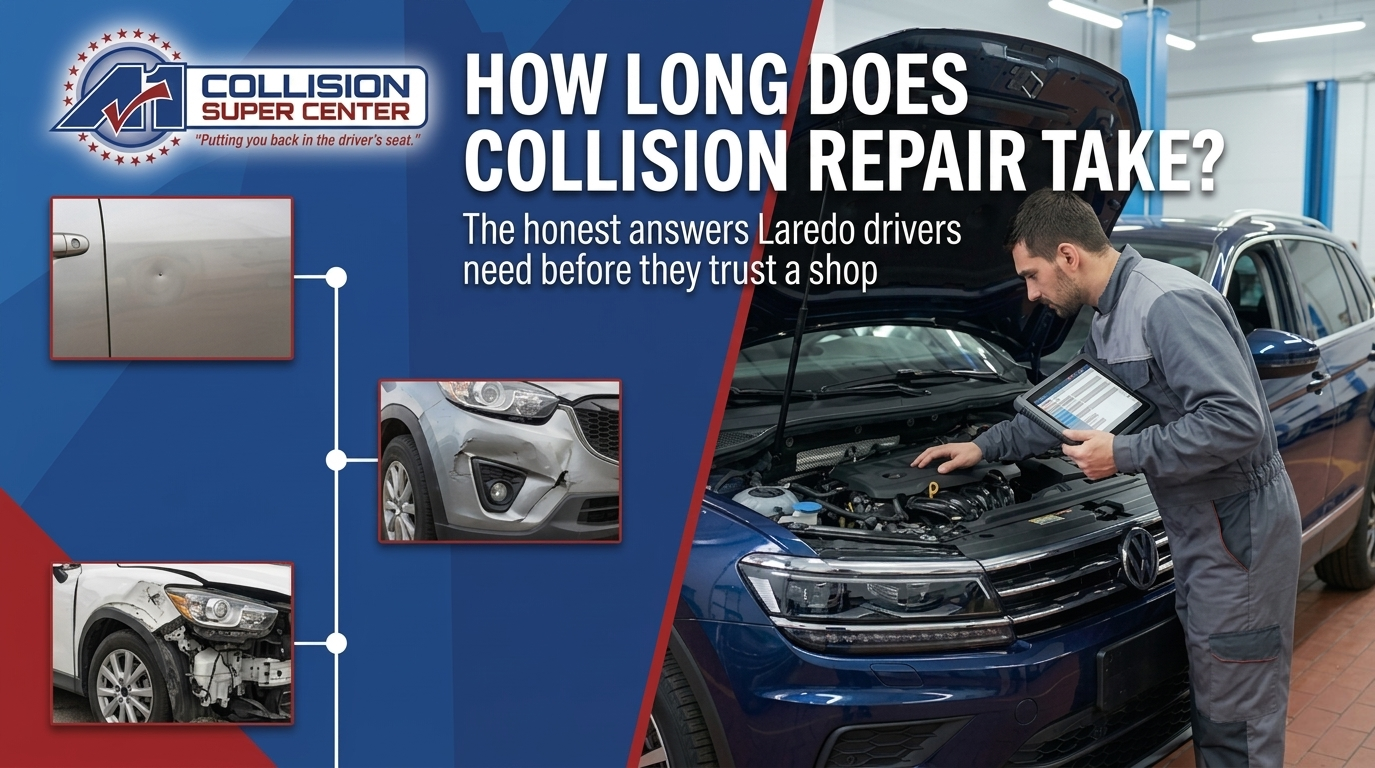
After a collision, one of the first questions most drivers ask is simple:
How long is this going to take?
It is a fair question. You need your vehicle for work, school, family, errands, and everyday life in Laredo. When your car, truck, or SUV is sitting in a collision repair shop, time matters.
The honest answer is that collision repair timelines depend on the damage, the insurance process, parts availability, and the amount of work needed to repair the vehicle correctly. Some repairs move quickly. Others take longer because safety, structure, paint, electronics, and hidden damage all have to be handled the right way.
At A1 Collision Super Center, the goal is not just to get your vehicle back to you quickly. The goal is to get it back to you safely, properly, and with confidence.
This guide breaks down what affects your repair timeline, what you can expect during the process, and what Laredo drivers can do to help keep things moving.
The honest answer: it depends on the damage
No two collision repairs are exactly the same.
A small bumper scuff is very different from a front-end collision that damages the hood, fender, headlight, radiator support, suspension, and safety sensors. The outside of the vehicle may only tell part of the story.
A few of the biggest things that affect repair time include:
How much visible damage there is
Whether there is hidden damage behind the panels
Whether the vehicle is safe to drive
How quickly insurance approval comes through
Whether parts are available right away
Whether paint, blending, frame repair, or mechanical work is needed
Whether safety systems need inspection, repair, or calibration
That is why a good collision center should never promise a repair time before the vehicle has been properly inspected. A realistic timeline comes from understanding the full repair plan, not from guessing.
Minor collision damage may take less time
Minor damage usually means the vehicle has cosmetic or light body damage without deeper structural or mechanical issues.
This may include:
Small dents
Light scratches
Bumper scuffs
Door dings
Minor hail damage
Small paint chips
Trim or molding damage
In some cases, minor repairs can move faster, especially when parts are not needed or when paintless dent repair is an option. If the damage is limited and the vehicle does not need disassembly, frame work, or major refinishing, the process is usually simpler.
That said, even small damage should still be inspected. A bumper may look like it only has a scratch, but the brackets, sensors, or impact absorber behind it could be damaged. What looks minor in the parking lot may be more involved once the vehicle is checked properly.
Moderate damage usually needs more planning
Moderate collision damage often involves damaged body panels, replacement parts, paint work, and insurance coordination.
Examples include:
Damaged fenders
Cracked or crushed bumpers
Door damage
Hood damage
Quarter panel damage
Broken headlights or taillights
Panels that need paint blending
Damage from a parking lot collision or side swipe
This type of repair may require the shop to remove damaged parts, order replacements, prepare the panels, match the paint, blend the color into surrounding panels, and reassemble everything correctly.
This is where the timeline can start to stretch. Not because the shop is sitting around, but because each step has to happen in the right order.
The estimate has to be approved. Parts have to arrive. The vehicle may need to be disassembled. Paint and refinishing work require proper prep and curing time. Then the vehicle has to be reassembled and inspected before delivery.
Rushing one step can create problems in the next one.
Major collision repair takes longer for a reason
Major collision damage is more complex because it may involve structural repairs, mechanical repairs, airbag systems, suspension work, electronics, and advanced safety features.
This may include:
Frame or unibody damage
Airbag deployment
Severe front-end damage
Rear-end damage with hidden structural issues
Suspension damage
Wheel or axle damage
Cooling system damage
Electrical damage
Safety sensor or camera damage
Modern vehicles are built with crumple zones, sensors, cameras, computers, and advanced materials. That is great for safety, but it also means collision repair is more technical than it used to be.
A major repair may require computerized measuring, structural correction, welding, alignment work, diagnostics, and safety system checks. The vehicle has to be repaired in a way that supports how it is designed to protect you if another accident happens.
That takes time, and it should.
A repair that only looks good is not enough. It needs to be right underneath the paint too.
Insurance approval can affect the repair timeline
For many drivers, the vehicle repair itself is only one part of the timeline. The insurance claim can also affect how quickly work begins or moves forward.
The basic process often looks like this:
You open the claim with your insurance company.
The vehicle is inspected.
An estimate is written.
The insurance company reviews the estimate.
Repairs are approved.
Work begins.
Any hidden damage is documented through a supplement.
Insurance reviews the supplement.
Repairs continue.
Final quality checks are completed.
If the insurance company responds quickly, the process usually moves more smoothly. If there are delays in approval, adjuster review, or supplement authorization, the repair timeline can be affected.
This is one reason it helps to work with a collision center that deals with insurance companies every day. A1 Collision Super Center can help document the repair properly, communicate with the carrier, and guide you through the steps so you are not left trying to translate body shop language into insurance language by yourself.
Hidden damage can change the original timeline
Hidden damage is one of the biggest reasons collision repair timelines change.
When the first estimate is written, it is often based on what can be seen from the outside. Once the vehicle is taken apart, the repair team may find additional damage behind the bumper, under the panels, or near structural components.
For example:
A bumper may hide damaged brackets or impact absorbers.
A front-end collision may hide radiator support or cooling system damage.
A side impact may hide inner door or rocker panel damage.
A rear-end collision may hide damage inside the trunk area.
A wheel impact may hide suspension or alignment issues.
When hidden damage is found, the shop has to document it, update the repair plan, and send a supplement to the insurance company if a claim is involved.
This does not mean the original estimate was wrong. It means the full damage could not be seen until the vehicle was opened up.
It is frustrating when the timeline changes, but it is better to find hidden damage during the repair than to miss it and send the vehicle back onto the road with an unresolved safety issue.
Parts availability can make a big difference
Another major factor is parts availability.
Some parts are easy to get. Others may be delayed due to manufacturer availability, supplier timing, shipping, backorders, or specialty part requirements.
Common parts involved in collision repair include:
Bumpers
Fenders
Doors
Hoods
Headlights
Taillights
Grilles
Brackets
Radiators
Condensers
Sensors
Wheels
Suspension components
If a part is available locally or regionally, the repair may move faster. If a part is on backorder or has to come from a manufacturer warehouse, the shop may have to wait before continuing certain parts of the repair.
This is especially true with newer vehicles, specialty trims, advanced safety systems, and certain imported parts.
It may be tempting to rush and use whatever part is available first, but the right repair depends on using the right parts for the job. A reliable collision center will help explain what is needed and why.
Paint, blending, and refinishing take time
A lot of people think the paint stage is quick. In reality, proper refinishing requires careful work.
The paint process can include:
Sanding and surface preparation
Primer
Sealer
Base coat
Clear coat
Paint matching
Blending into nearby panels
Curing time
Buffing and finishing
Matching paint is both technical and visual. Even if the paint code is correct, sun exposure, age, previous repairs, and the color itself can affect the final match. That is why blending into adjacent panels may be needed to make the repair look natural.
In Laredo sunlight, paint quality matters. A rushed paint job can show mismatched color, texture problems, rough edges, or finish issues. Taking the time to prep, paint, cure, and inspect the finish helps the repair look right after the vehicle leaves the shop.
Final quality checks matter before delivery
Once the repair work is finished, the vehicle still needs to go through final checks before it is ready for pickup.
This may include:
Checking panel alignment
Reviewing paint finish
Confirming lights and electrical items work
Road testing when needed
Checking for warning lights
Inspecting repaired areas
Cleaning the vehicle
Reviewing the repair order
Making sure the vehicle is ready for delivery
This final stage is important because it helps catch small issues before the vehicle is returned to you. The goal is for you to pick up your vehicle, feel confident in the repair, and get back to your normal routine with one less thing to worry about.
What Laredo drivers can do to help speed things up
You cannot control every part of the collision repair timeline, but you can help prevent unnecessary delays.
Here are a few smart steps:
File your insurance claim as soon as possible.
Get your claim number and keep it handy.
Take clear photos of the damage if the vehicle is safe to approach.
Share all insurance information with the shop early.
Respond quickly to calls, texts, or emails about approvals.
Ask about rental options early if you need transportation.
Remove personal items from the vehicle before drop-off.
Be honest about any prior damage or warning lights.
Choose a shop that can handle both collision and related mechanical needs.
The more complete the information is at the beginning, the easier it is for the team to keep the process moving.
Why choosing the right collision center matters
Repair time is important, but the fastest option is not always the best option.
After a collision, your vehicle may need more than cosmetic repair. It may need structural work, paint matching, mechanical service, diagnostics, and safety system checks. That is why choosing the right collision center matters.
A1 Collision Super Center serves Laredo drivers with collision repair, auto body work, paintless dent repair, service and repair, and support through the insurance process.
The advantage is simple: when your vehicle needs more than one type of repair, you do not have to bounce between disconnected shops. A1 can help coordinate the process and guide you from the first estimate to the final delivery.
That saves time, lowers confusion, and helps make sure the repair is handled as one complete plan.
How A1 Collision Super Center helps keep the process moving
At A1 Collision Super Center, the repair process is built around communication, coordination, and doing the job correctly.
Depending on your situation, the team can help with:
Online estimate scheduling
Photo uploads for initial review
Towing support at insurance rates
Onsite rental options
Insurance claim communication
Collision repair
Paint and refinishing
Mechanical service when needed
Final quality checks before delivery
A1 also has two convenient Laredo locations:
Main Location
3310 E. Saunders
Laredo, TX 78041
956-725-9119
North Location
609 Amistad
Laredo, TX 78041
956-728-8221
Whether your vehicle has light cosmetic damage or a more serious collision repair need, the first step is getting it inspected and understanding the repair plan.
So, how long will your collision repair take?
The real answer is this:
It depends on the damage, the parts, the insurance process, and the repair plan.
Minor repairs may be quicker. Moderate repairs may take longer because of parts, paint, and approval steps. Major repairs need more time because safety and structure are involved.
What matters most is that the repair is done correctly, not carelessly rushed.
If you have been in a collision in Laredo, A1 Collision Super Center can help you understand what needs to happen next, how the process works, and what kind of timeline may be realistic for your vehicle.
Ready to get an estimate in Laredo?
If your vehicle was damaged in a collision, do not guess your way through the repair process.
Call A1 Collision Super Center, schedule online, or upload photos to begin the estimate process. The team will review the damage, explain the next steps, and help you move from “How long will this take?” to “I know what happens next.”
A1 Collision Super Center
Getting Laredo drivers back in the driver’s seat with collision repair done right.